
Articles
Articles
-
A decade of change: Demographic Trends
Between 2015 and 2024, migrants became an increasingly structural component of European societies. In EU14 countries, migrants represented 12.1% of … Continue reading "A decade of change: Demographic Trends" -
CITIZENSHIP
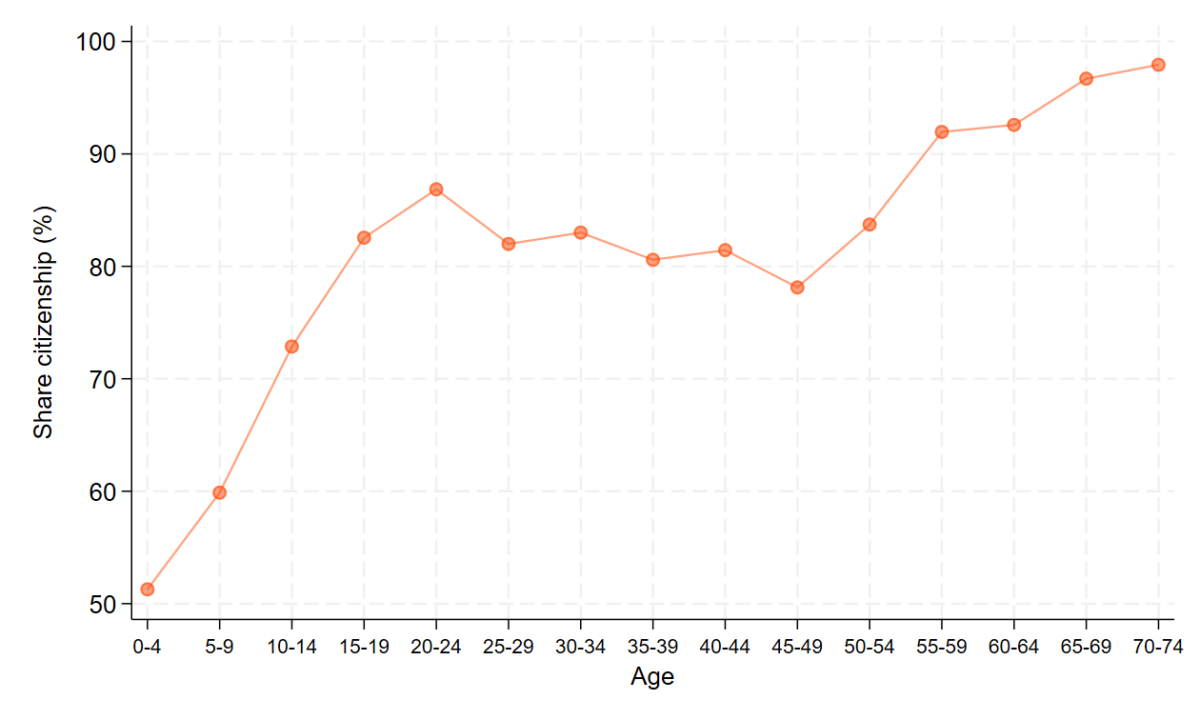
One of the key dimensions of immigrant integration is citizenship acquisition. Naturalisation plays a significant role in the European Union, … Continue reading "CITIZENSHIP" -
LABOUR MARKET OUTCOMES
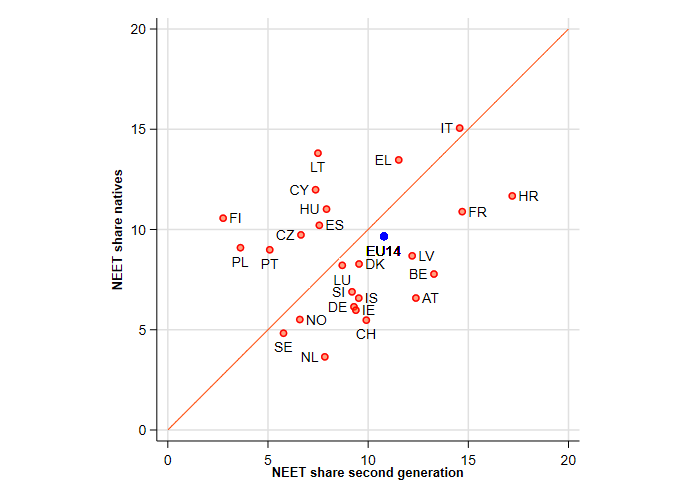
In all countries with a significant migrant population, second-generation immigrants have a higher probability of employment than first-generation immigrants, but … Continue reading "LABOUR MARKET OUTCOMES" -
Second generation immigrants in Europe
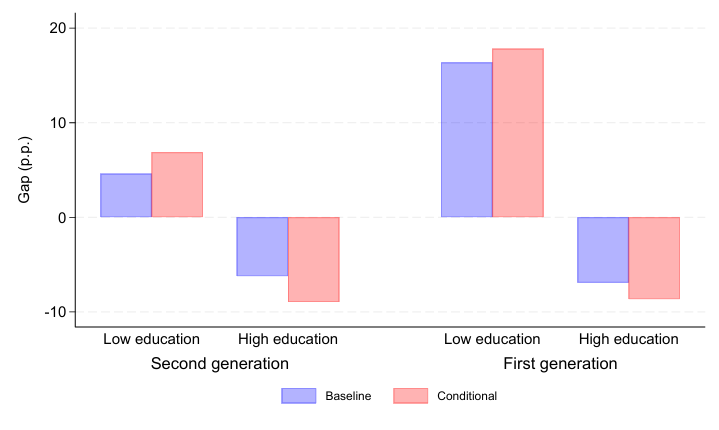
Since large-scale immigration is a relatively recent phenomenon in many European countries, second-generation immigrants make up a smaller share of … Continue reading "Second generation immigrants in Europe" -
Education and assimilation in the European labour markets
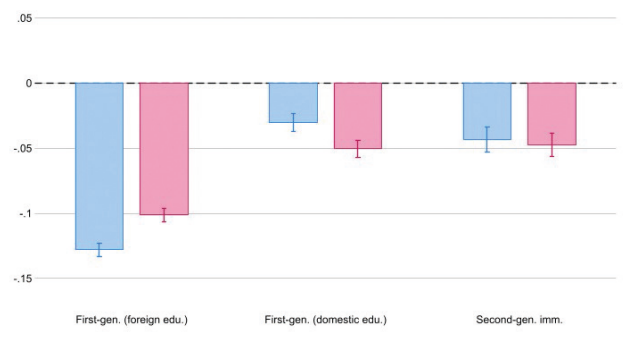
Immigrants with a foreign education have the most significant employment probability gap (13 p.p.) relative to natives (Figure 3). Such a gap cannot be explained by differences in the age, gender and educational composition of the two populations: when compared to natives with the same demographic profile, the employment probability gap of foreign-educated immigrants is still ten percentage points. -
Naturalizations patterns in Europe
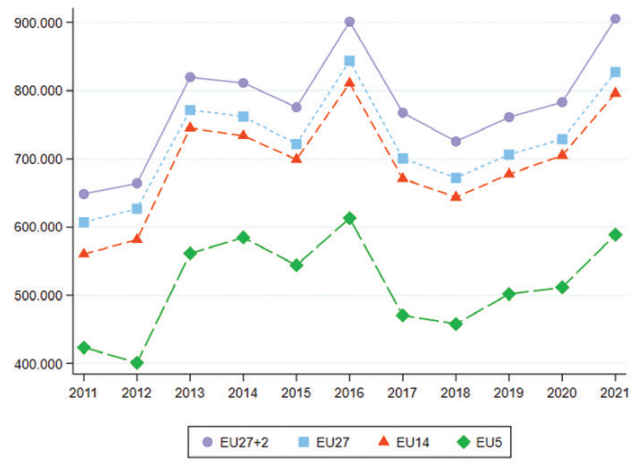
Overall, according to Eurostat data, there were about 905 thousand naturalizations across European countries in 2021, a 40% increase relative to the 648 thousand naturalizations in 2011. Besides 2021, a second major annual peak of naturalizations happened in 2016, when more than 900 thousand immigrants naturalized across the whole Europe. -
Immigrant women and elementary jobs
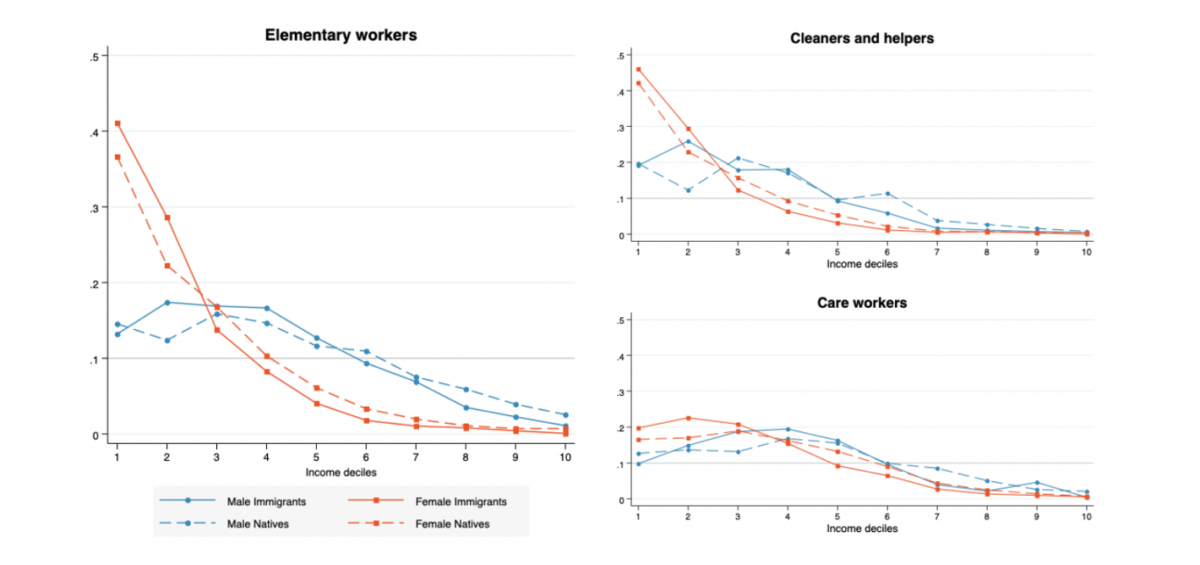
Almost one fourth of immigrant women in Europe (24%, 25% in EU14 countries) are employed in “elementary occupations”, i.e., occupations that require a low level of skills and competences as they consist of simple and routine tasks, which often demand some physical effort and the use of hand-held tools. -
The immigrant population in Italy
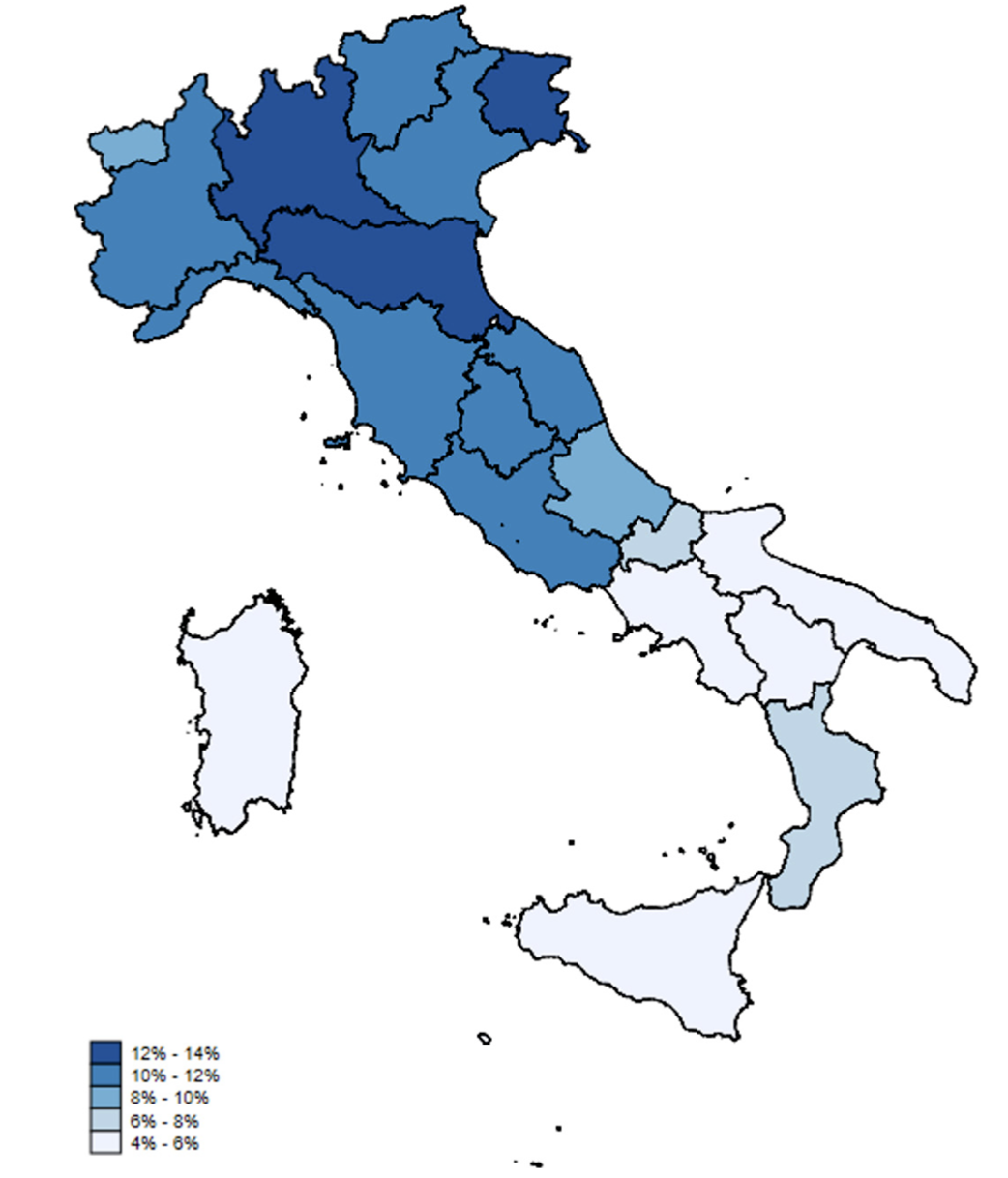
The immigrant population in Italy has slowly, but quite steadily, increased over the last decade. -
The effects of the COVID-19 crisis on immigrants in Italy
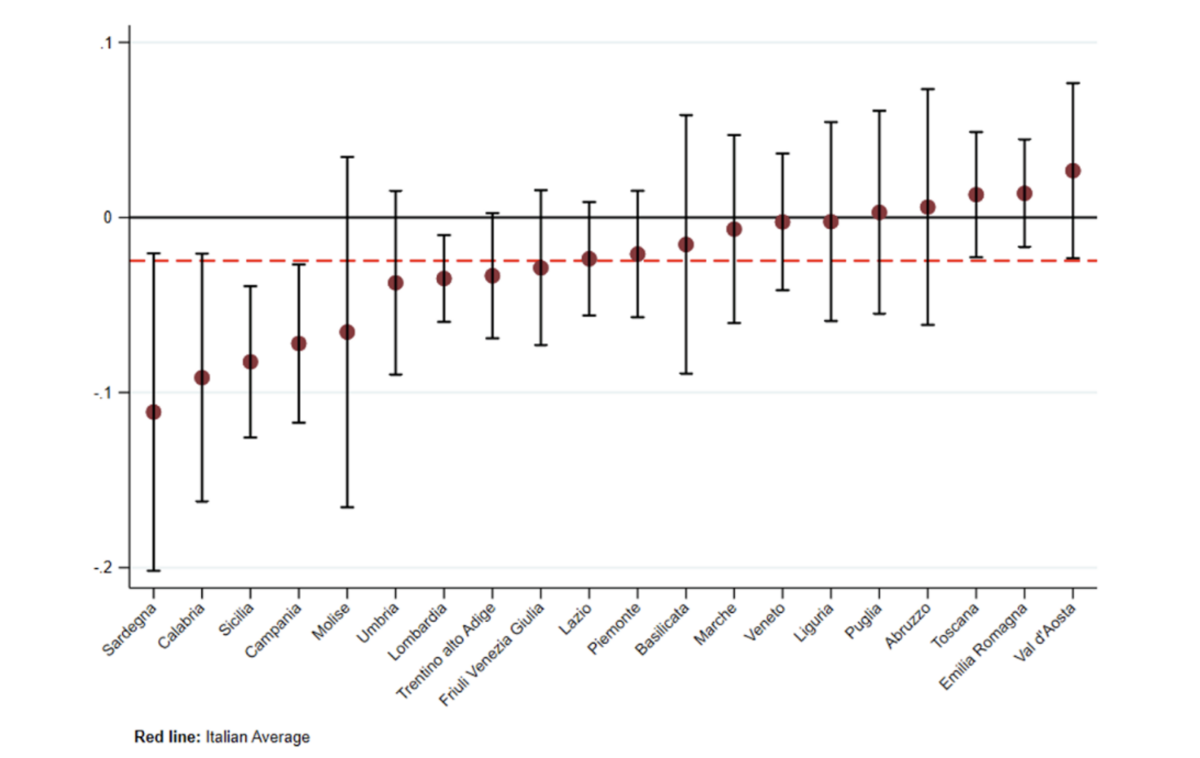
The data suggests that immigrants may have been more exposed than natives to the coronavirus-induced crisis that has unfolded during 2020, and Italy was the first European country strongly hit by the virus. -
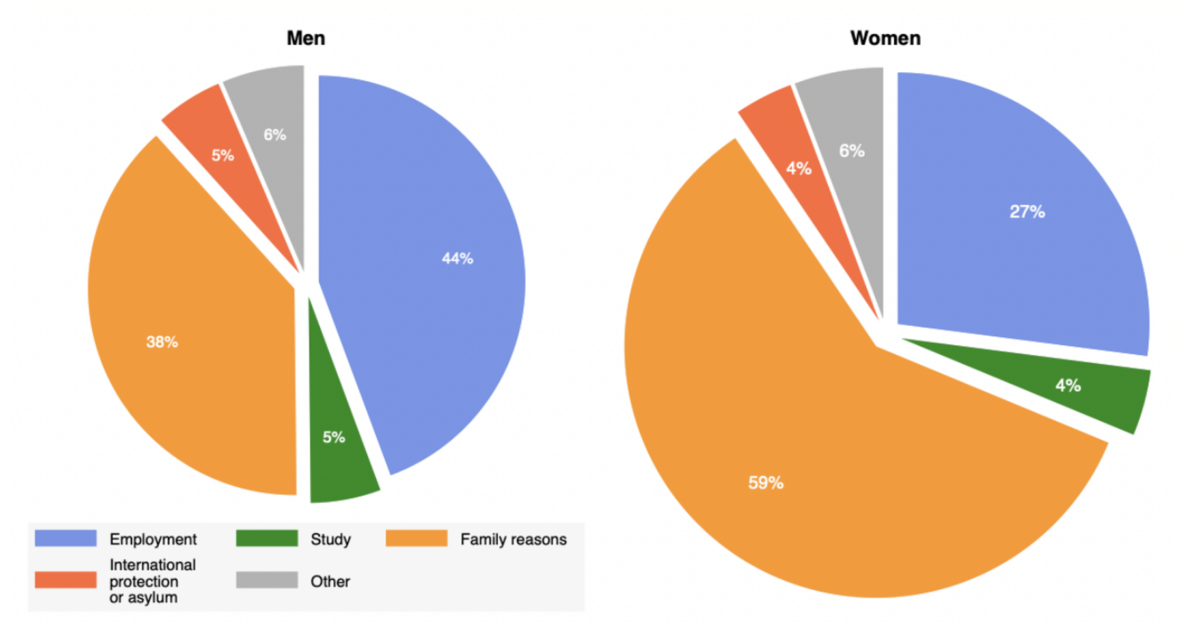
Why do immigrant women migrate to Europe?
How can such a large additional immigrant-specific gender gap be explained? In this article we investigate the role of reason for migration in the determination of labour market outcomes.